
 My Alerts

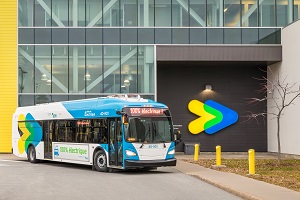
Our 100% electric buses
In addition to the new models manufactured by Nova Bus, we also have 30 40-foot electric buses.
Limiting GHG emissions
According to a 2016 study, every tonne of GHGs emitted by the STM can prevent about 20 tonnes from being emitted in the Greater Montréal area. Electrifying our network will further contribute to the fight against climate change by reducing our own GHG emissions.
Our 30 long-range New Flyer buses have been in operation on our regular bus routes since 2019. They have a range of 250 kilometres and are equipped with air conditioning to ensure customer comfort.
The advantages of electric buses


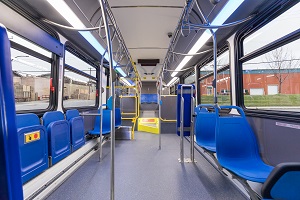
- More comfortable thanks to smoother handling on the road
- Quieter ride
- LED lighting
Depending on the bus configuration:


- Air conditioning
- USB ports
- Second reserved area for wheelchair users
- Charger plug
Our infrastructure
When we talk about electrifying our surface system, it’s not just about acquiring fully electric vehicles. It’s also about retrofitting our bus garages so that we can integrate new technologies.
Our lab at the Stinson bus garage
We’ve been electrifying our infrastructure to make it compatible with electric buses. The Stinson bus garage was the first to be partially electrified.
Stinson has been our lab for all things electrification since 2019, which is when we began running tests with the charging technologies at the garage to find the best ways to maximize the use of our electric buses.

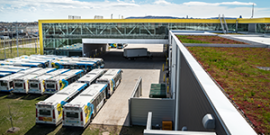
Did you know that the Stinson bus garage is LEED Gold certified and has one of the largest green roofs in Quebec?
The garage is equipped with pantographs and charger plugs with a capacity of 150 kWh. This is the minimum power required to achieve the ideal charging time and optimize service delivery with electric buses.
We have 9 pantographs inside the Stinson bus garage. And because a bus garage never sleeps, we had to pull out all the stops! Keeping the bus aisles clear and protecting the work areas without disrupting service is a challenge in itself. We were one of the first transit agencies to install indoor pantographs.
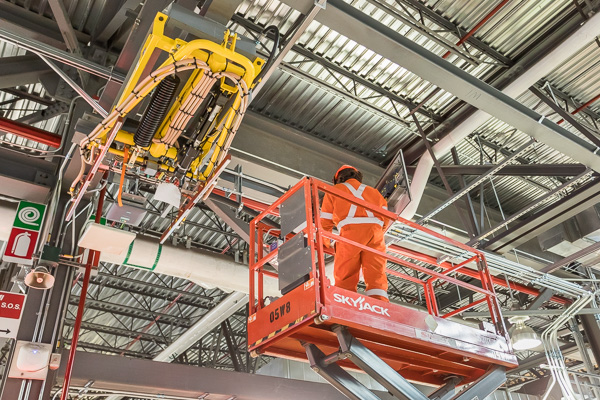
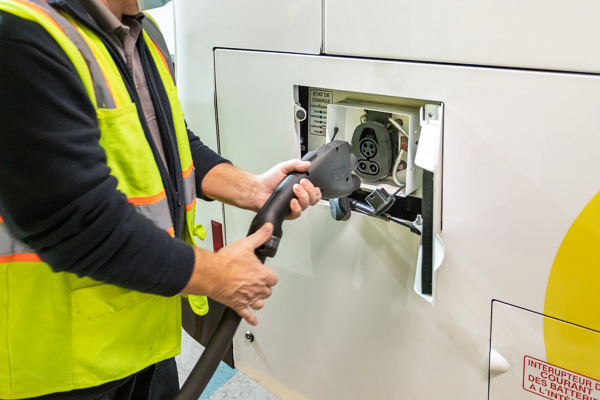
The charger plugs are very safe and can be handled without special gear. We installed 44 outlets like this, plus two mobile chargers for the maintenance area.
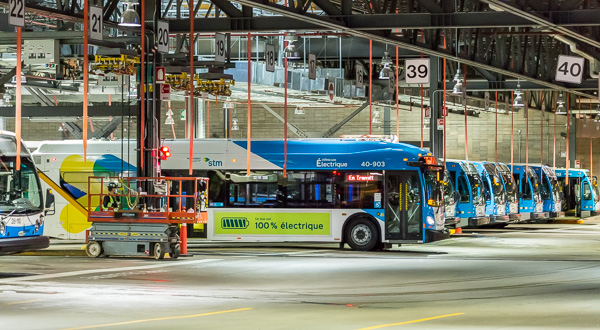
Using a supervisory control and data acquisition (SCADA) system, we can view and monitor the buses’ charge status remotely and make sure that buses are recharged as needed.
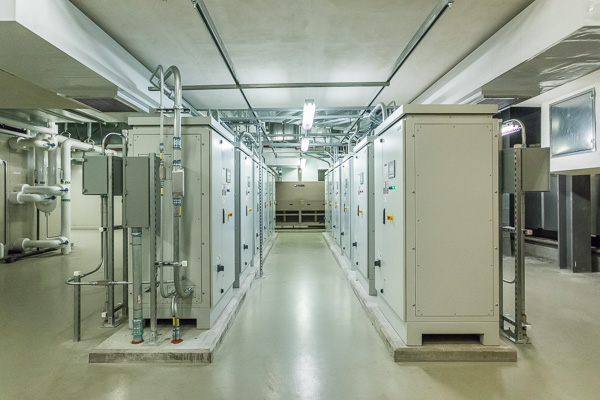
Above are the 12 chargers that power the buses in the four electrically equipped aisles. Since this equipment generates heat, we installed a ventilation and air conditioning system to control the room temperature.